Chapter 02: Two Tenures at MD Anderson
Files
Loading...
Description
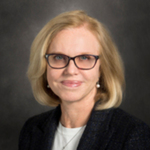
Dr. Hagberg recalls her first role at MD Anderson in Dr. Evan Hirch’s clinical immunology lab. Working under Dr. James Rubin in hematopathology proved to be a pivotal experience, fostering scientific rigor and intellectual curiosity that led her to pursue a career in anesthesiology. She praises Dr. Rubin’s mentorship, noting that it shaped her own approach to guiding others. As she reflects, “The greatest gift you can give someone is belief in their capacity to overcome what they fear.”
She also discusses the evolution of MD Anderson under the different presidents she has served. In 1982, MD Anderson focused on scientific discovery to gain national prominence. By the time she returned in 2016, it had become a globally recognized cancer center with bold scientific ambition. Under the leadership of Dr. Peter Pisters, the institution has further developed into a highly integrated medical system that emphasizes operational excellence and leadership development.
Identifier
HagbergC_20260224_C02
Publication Date
2-24-2026
Interview Session
Carin Hagberg MD, FASA Oral History Interview, February 24, 2026
Topic Covered
Joining MD Anderson; Research; Growth and/or Change; MD Anderson Culture; Institutional Mission and Values; Personal Reflections, Memories of MD Anderson; On Research and Researchers
Creative Commons License

This work is licensed under a Creative Commons Attribution-Noncommercial-No Derivative Works 3.0 License.
Disciplines
History of Science, Technology, and Medicine | Oncology | Oral History
Transcript
Jose Javier Garza
Wonderful, thank you. I guess for, like, the next section of questions, I kind of want to rewind a little bit. You have—of some of the people we interview, you have the honor of having actually two times at MD Anderson. So I kind of wanted to ask what you remember about MD Anderson during your earlier years working in the clinical immunology lab. And what was it like working with Dr. James Rubin and in Evan Hirsch’s lab?
Carin A. Hagberg, M.D., FASA, FACHE
These bring back fond memories for me, I have to say. (laughs) What I remember most about MD Anderson in 1982 was the seriousness of purpose or mission. You know, it was my first job out of college. I joined Dr. Evan Hirsch’s clinical immunology lab and worked directly under Dr. James Rubin in hematopathology. But even as a young research assistant—I was young; like I said, it was my first job out of college—I could feel that this was the place where the mission truly mattered. The work wasn’t abstract. It was directly connected to patients who were waiting for better treatments. And at the time, we were studying interferon, which was an early form in immunotherapy. And it’s amazing to think about that now knowing how immunotherapy has become a cornerstone of cancer treatment, but back then—you know—it felt pioneering. We were working on something that had a real potential to change the field. And Dr. Hirsch was a visionary in immunology and cancer therapy.
Dr. Rubin was really an extraordinary mentor to me personally. He modeled scientific rigor, humility, and intellectual curiosity, but he really made you feel like your work mattered even if you weren’t the one presenting it or receiving the recognition. And I think, most importantly, he encouraged me to pursue medicine which was really the reason I came down to Texas from Massachusetts, was to go to medical school here at an affordable price. But he encouraged it and knew that’s what I wanted to do. He would even let me study in the lab. He would walk by, and I often had a book open. And he encouraged it. He didn’t say, Put the book down, Carin. You know what I mean? But that experience taught me something that I’ve carried throughout my career. Excellence is cultural. You absorb it before you ever lead it. And I think being in that laboratory shaped my expectations for rigor, integrity, and purpose even long before I had formal leadership responsibility.
Jose Javier Garza
Wow, thank you. And that does speak to something that, I think, has been ingrained in MD Anderson’s culture from the very beginning is both this educational mission but also this purpose of both treating and researching and educating for oncology and cancer research. So, thank you for sharing that. In your previous interview, you mentioned a story about T-cell and B-cell lymphocyte markers. Could you share a little bit more about that story?
Carin A. Hagberg, M.D., FASA, FACHE
Sure, sure. There really is a story behind the T and B-cell lymphocyte markers. But at the time, we were enrolling patients on experimental immunotherapy protocols. So, patients with breast cancer, melanoma and even AIDS, we started these trials with these particular patients. At least that’s the main study that I was involved in, but many of these patients had a life expectancy of six months or less to qualify for these studies. These patients were incredibly brave, really. They knew that therapies were unproven, but they were still willing to participate in the hope of helping future patients. I just thought—that was just amazing for me to see, but part of my blood was collecting blood samples to measure T and B-cell markers. What wasn’t, though, in the job description—here’s where the story comes in—was that I would be performing the venipuncture myself. So, the irony is that, as a child, I had a true phobia of needles. I mean, I nearly fainted when I had blood drawn or I was a little kid that always hid in the girls’ bathroom at the time of a vaccination when I was in grammar school. And the teacher would have to come find me and drag me out of the bathroom and bring me to the front of the line to get my shot, my vaccination.
But, anyway, now I had to do this. I had to stick—perform venipuncture. The first time wasn’t easy, but the first time, Dr. Rubin, he didn’t just let it go. I was at the point where I remember calling my dad and saying, Dad, I think I need to come home. I have a true phobia of needles. I don’t think I can do this job. I don’t think I can be a doctor. I don’t do needles. So Dr. Rubin sent me to work in the phlebotomy lab for a full week, forty hours, drawing blood over and over again until I became competent and actually confident. So I did that. In fact, I eventually became quite good at it, and patients would actually request me and would call me when my colleagues were unsuccessful. And this experience, this led me down the path to become an anesthesiologist. So, I think what stayed with me most wasn’t just overcoming the fear, but it really was the mentorship that Dr. Rubin had provided me. He had patience. He had faith in me before I fully had it in myself. And he didn’t lower the standard. He helped me rise to meet it. And I would say that experience profoundly shaped how I even mentor others. We always say that growth often requires discomfort. And I think sometimes the greatest gift you can give someone is belief in their capacity to overcome what they fear. I’ll never forget him, and I’ll never forget those patients.
Jose Javier Garza
Wonderful, thank you. I guess you kind of already answered a part of the question, but how do you felt that the institution operated from when you came back to the institution in 2016, and what was it like working under the different presidents during those periods?
Carin A. Hagberg, M.D., FASA, FACHE
Man, that’s a wonderful question, Javier, because I’ve had the privilege of seeing MD Anderson across different eras. And when I first arrived in 1982, it was a much smaller, more intimate institution. The Pink Marble Clark Clinic was essentially MD Anderson. And Dr. Charles LeMaistre was the president at the time. The culture was intensely academic and discovery-driven, but it felt very personal. Leadership, I guess, provided was visionary—you know—focused on building national prominence through scientific excellence. And there was complexity, but nothing like today. When I returned in 2016 as division head under Dr. Ron DePinho, MD Anderson had become a globally recognized cancer center with enormous scientific ambition. There was really bold, transformational thinking, moonshots, rapid acceleration of discovery. And at the same time, the institution was navigating operational and financial challenges. This is when I came in.
And it was interesting times, let me say that. It was really a period of recalibration, aligning big vision with now sustainability and restoring stability. And today, under Dr. Peter Pisters, I see an institution that has really matured into a highly integrated academic medical center on its journey to becoming an even larger cancer system. You know, there’s a strong emphasis on transparency by Dr. Pisters, safety and measurable performance. Trust has been rebuilt through operational discipline and closing the budget gap, which we recently underwent. Communication has been elevated, I would say, through the blueprint for impact. There’s been a deep investment in leadership development with our Leadership Institute that’s been created under his leadership—professionalism, actually, which I oversee, the Center for Professionalism, Support and Success, and the wellbeing of our workforce.
We’ve now recruited a chief wellness officer who I actually helped in that recruitment, but we’ve experienced historic fundraising and really thoughtful expansion. But I would say, as I step back, I guess I see an evolution. The early years were about building reputation; 2016 was about recalibrating ambition and sustainability. And today, it’s more about integration, aligning science, clinical care, education, culture, and operational excellence, and a disciplined, people-centered way. You know, we’ve grown from 8,000 employees, that’s what it was when I first came, just over 8,000, to nearly 27,000.
Jose Javier Garza
Wow!
Carin A. Hagberg, M.D., FASA, FACHE
Right, there was just over 300 faculty to more than 2,000 now. And from half a million outpatient annual visits to nearly 1.7 million annual visits. Isn’t that amazing?
Jose Javier Garza
Oh, yeah, yeah.
Carin A. Hagberg, M.D., FASA, FACHE
It’s amazing. To me, it’s like amazing. But our North Star has never moved. It’s always been pointed to the patients we serve.
Jose Javier Garza
Yeah, and I really appreciate—especially in the last couple of years, as you talk about this growth, but also transparency, and the fact that the institution did add its core values of stewardship and safety to both help address—to help address kind of like this direction that the institution is going in. So it’s great that the institution is able to adapt and address some of these things head on.
Carin A. Hagberg, M.D., FASA, FACHE
Yes, very much so. I totally agree with you. And as Dr. Pisters always says—we’re a learning organization. We just keep learning and making improvements and getting better.
Jose Javier Garza
Yeah, and—yeah, it is interesting, especially when you look at the timeline where you say, Oh, MD Anderson treated its 100,000th patient. And then maybe ten, fifteen years later, Oh, we treated our 200,000th later—200,000th patient. And then that timeline between that just keeps on shrinking and shrinking.
Carin A. Hagberg, M.D., FASA, FACHE
Right.
Jose Javier Garza
So, it’s amazing to see how well we’re doing.
Carin A. Hagberg, M.D., FASA, FACHE
Right, right, right, so true.
Recommended Citation
Hagberg, Carin M.D., FASA, FACHE and Garza, Jose Javier, "Chapter 02: Two Tenures at MD Anderson" (2026). Interview Chapters. 1614.
https://openworks.mdanderson.org/mchv_interviewchapters/1614
Conditions Governing Access
Open
Accessibility Statement
This item was created prior to May 2026. It is preserved for research, reference, or historical recordkeeping. Following WCAG 2.1, the library may provide accessible versions of archival materials upon request. For accommodation requests please submit an accessibility request form.