
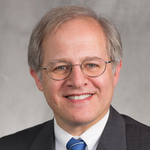
Ethan Dmitrovsky, MD, Oral History Interview, July 7, 2015
Files
Download Full Interview Transcript (519 KB)
Loading...
Description
Major Topics Covered:
- Global Academic Programs and international partnerships
- Conflict of interest; ethics; social responsibility; institutional transparency
- Leadership philosophy
- MD Anderson mission and culture
- Cancer as a problem of humanity
Interview Chapters
Chapter 18: Global Academic Programs: a Review of International Collaboration
Chapter 19: Cancer is a Problem for All Humanity: A Truth that Inspires Faculty
Chapter 20: Addressing Perceived Conflict of Interest
Chapter 21: The Next Ten Years: Goals for MD Anderson Research and Faculty
Chapter 22: The Next Ten Years: Stewardship and Building A Culture of Care For Faculty and Staff
Identifier
DmitrovskyE_04_20150707
Publication Date
7-6-2015
Publisher
The Making Cancer History® Voices Oral History Collection, The University of Texas MD Anderson Cancer Center
City
Houston, Texas
Creative Commons License

This work is licensed under a Creative Commons Attribution-Noncommercial-No Derivative Works 3.0 License.
Topics Covered
University of Texas MD Anderson Cancer Center; UT MD Anderson Cancer Center; University of Texas System. M.D. Anderson Cancer Center; M.D. Anderson Hospital and Tumor Institute at Houston; University of Texas M.D. Anderson Cancer Center; M.D. Anderson Hospital and Tumor Institute
Disciplines
History of Science, Technology, and Medicine | Oncology | Oral History
Recommended Citation
Dmitrovsky, Ethan MD and Rosolowski, Tacey A. PhD, "Ethan Dmitrovsky, MD, Oral History Interview, July 7, 2015" (2015). Interview Sessions. 104.
https://openworks.mdanderson.org/mchv_interviewsessions/104
Conditions Governing Access
Open

About the Interview
About the Interview Subject:
Ethan Dmitrovsky, MD came to MD Anderson in 2013 to serve as the institution’s Provost and Executive Vice President. He has a faculty appointment in the Department of Thoracic/Head and Neck Medical Oncology in the Division of Cancer Medicine.
Dr. Dmitrovsky’s translational research areas include: retinoid differentiation-based therapy for acute promyelocytic leukemia (APL); developed the molecular genetic test used to detect the PML/RARalpha transcript from the APL t(15;17) rearrangement; retinoid mechanisms leading to cell cycle arrest and repair of DNA damage in normal/malignant lung epithelial cells; engineered transgenic mouse models that express wild-type or proteasomal degradation-resistant cyclin E species in the lung; derived lung cancer cell lines leading to a new model to assess activity of lung cancer therapy and chemopreventive agents (antineoplastics).