Chapter 13: Global Academic Programs: Two Examples of Collaboration
Files
Loading...
Description
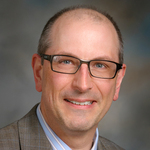
Dr. Bogler discusses MD Anderson’s collaboration with two institutions, the German Cancer Research Center in Heidelberg and the Instituto de Cancerologia–Clinica Las Americas (IDC) in Medellin, Colombia.
He first characterizes institutional collaborations then talks about the specific support that Global Academic Programs provided these two institutions. The Instituto de Cancerologia needed help establishing clinical trials for surgical procedures, and Dr. Bogler explains the differences between trials focused on drugs versus surgery. He also underscores the importance of reciprocal visits between institutions to solidify the relationships and mutual trust.
Next, Dr. Bogler explains the two-phase process an institution must go through to become a sister institution. He lists the criteria that MD Anderson uses to determine the viability of a prospective partner: program infrastructure, status in the health care environment, research capabilities, the strategic opportunities a partnership would offer MD Anderson, the institution’s capacity for commitment.
Identifier
BoglerO_02_20141117_C013
Publication Date
11-11-2014
Publisher
The Historical Resources Center, Research Medical Library, The University of Texas Cancer Center
City
Houston, Texas
Interview Session
Oliver Bogler, PhD, Oral History Interview, November 17, 2014
Keywords
The University of Texas MD Anderson Cancer Center - An Institutional Unit; On the Nature of Institutions; MD Anderson Impact; Institutional Processes; Institutional Mission and Values; Research, Care, and Education; The MD Anderson Brand, Reputation; Beyond the Institution; Understanding the Institution; Understanding Cancer, the History of Science, Cancer Research; Global Issues –Cancer, Health, Medicine
Creative Commons License

This work is licensed under a Creative Commons Attribution-Noncommercial-No Derivative Works 3.0 License.
Disciplines
History of Science, Technology, and Medicine | Oncology | Oral History
Transcript
Tacey Ann Rosolowski, PhD:
All right. So we are recording, and it is 3:08, and today is November 17th, 2014. This is Tacey Ann Rosolowski, and I am in the Office of Academic Affairs interviewing Dr. Oliver Bogler for our second interview session. Thank you very much again for participating.
Oliver Bogler, PhD:
0:00:24 Thank you.
Tacey Ann Rosolowski, PhD:
0:00:25 And last time we ended up the interview kind of setting the context for global initiatives at MD Anderson. So today I really wanted to focus on Global Academic Programs and what the services you offer, kind of what the history is, and your vision for the future. And just as a place to start, what was the situation in Global Academic Programs when you took over as vice president in 2010?
Oliver Bogler, PhD:
0:00:57 So I joined GAP in July, I think it was, 2010. At the time, Global Academic Programs, GAP, had been without a VP for close to year, I think it was. Karen Fields, the prior VP, had left, and Hilario Matta, who is the director in the team, had been running the group. That’s H-i-l-a-r-i-o. So at the time, GAP was one of the three legs in a group called the Center for Global Oncology, the other two legs being the departments of Global Business Development and Global Clinical Programs. I think that’s what they were called. And that kind of reflected the structure of the institution. You know, at the time we had three executive vice presidents: Dr. Dubois for the academics, Dr. Burke for the clinical, and Dr. Leach for the business. So that kind of mirrored that structure. We each reported to our EVPs, each of the three vice presidents, and we worked collaboratively on international and national activities. Mostly as I joined the team, the focus for the other two components became more and more domestic, and over time they focused on partnerships like MD Anderson Banner, or Banner MD Anderson, I should say, MD Anderson Cancer Center at Cooper, and these are then what became rebranded as the Cancer Network, MD Anderson Cancer Network. The structure changed a couple of times, but ultimately now we’ve become separated in a way, because those two groups are under the Cancer Network, and there’s a third team there now called Global Clinical—no. What are they called? It’s not the Business Development, it’s not the Clinical Programs, it’s the—it’s Maggie Rowe’s group. She’s the VP of that group, and she basically runs things. So at the time when I was there or the time that the Center for Global Oncology existed, Maggie was associate vice president. Maggie Rowe, Dr. Rowe, she’s a physician in the Emergency Services for clinical duties, but she was the associate vice president with Ed Diaz. Dr. Diaz is the VP for Global Clinical, and Maggie was on the ground at Banner and really built that relationship there on the ground. Anyway, I came into the GAP team, and GAP’s role is academic collaboration, and we do work with our partners in the Cancer Network on the academic components of their clinical and business relationships, but our core mission in GAP is to support the international academic work of our faculty. As I often say, one way to think about GAP is as an academic service team, and that’s one of the reasons that it makes a lot of sense for them to be part of the Division of Academic Affairs because Academic Affairs is composed entirely of teams whose job it is to provide services to the academic population at MD Anderson. So GAP is no different. One of the key distinctions between the way GAP does business and the way the Cancer Network does business is that GAP follows the faculty. So we don’t pick the relationships, we don’t pick the partner centers that we bring into the Network. Our faculty pick them, and they pick them on the basis of experience and activity. So the classic way that a relationship gets formed is that a faculty member or a group of faculty members will approach GAP and say, “Hey, I’ve been working with this great center in this-and-this place. We’re already doing these things together. We’re publishing together. We’re maybe doing a clinical trial or something. I would like to explore this situation further. I’d like to build it out. I’d like your help in seeing whether they can become a sister institution.” So that’s a little bit different from the way the Cancer Network does business, which is they really do start with a strategic market analysis, for example. They identify Phoenix, for example, as a great place to have a Cancer Center because there’s no dominant one, and then they go and look at partners and so on. So it’s just a different way of doing business, and that’s a common misunderstanding, even in the broader MD Anderson community. I don’t sit in my office, as I like to say, with a map and a dart, picking places to go. I get lobbied on an almost weekly basis, I would say, by people, also by outside entities saying, “Hey, how about this relationship,” “How about that relationship.” So we really have a different role and we do things in a different way, and the reason we do it that way is that we have learned that if there’s not strong faculty commitment to the relationship, nothing really results. And that sounds very self-evident, and it is, but it’s a truth that you have to live with. If you build relationships that have no faculty champions, as we call them, on both sides, then the relationship doesn’t end up prospering, not much activity results, and it’s really just a sort of empty gesture in the end. And that’s something, of course, we don’t have in our network, we try very hard to avoid, and so those are some of our preconditions of how we do business.
Recommended Citation
Rosolowksi, Tacey A. PhD and Bogler, Oliver PhD, "Chapter 13: Global Academic Programs: Two Examples of Collaboration" (2014). Interview Chapters. 1568.
https://openworks.mdanderson.org/mchv_interviewchapters/1568
Conditions Governing Access
Open