Chapter 01: How a Son's Career Can Parallel a Father's
Files
Loading...
Description
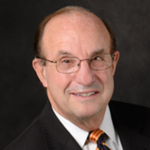
In this chapter, Dr. Balch talks the choices his father made while developing a career as a chemist. He observes that his own career path paralleled his father's track: entrepreneurial, research based, and academic. Dr. Balch keys on the fact that his father's entrepreneurial initiatives involved vision, a key leadership quality. Dr. Balch then talks about the leadership qualities that have been important in his own career.
Next, Dr. Balch talks about R. Lee Clark's vision for MD Anderson. He describes how he met Dr. Clark.
Identifier
BalchC_01_20181022_C01
Publication Date
10-22-2018
Publisher
The Making Cancer History® Voices Oral History Collection, The University of Texas MD Anderson Cancer Center
City
Houston, Texas
Interview Session
Topic Covered
The Interview Subject's Story - Personal Background; Leadership; On Leadership; Personal Background; Character, Values, Beliefs, Talents; Personal Background; Inspirations to Practice Science/Medicine; Influences from People and Life Experiences; Institutional Mission and Values; MD Anderson History; MD Anderson Snapshot; Portraits
Creative Commons License

This work is licensed under a Creative Commons Attribution-Noncommercial-No Derivative Works 3.0 License.
Disciplines
History of Science, Technology, and Medicine | Oncology | Oral History
Transcript
T.A. Rosolowski, PhD And I want to say for the record that today is October 22nd, 2018, and I’m in the Historical Resources Center Reading Room on the 21st floor of Pickens Tower, on the main campus of MD Anderson Cancer Center in Houston, Texas. And today I am seated with Dr. Charles Balch, who has come in to talk about many, many things related to surgery, and immunology, and the development of the institution. And so I wanted to say, first of all, thank you for coming in.
Charles Balch, MD
I’m pleased to be here.
T.A. Rosolowski, PhD
Yeah, I’m delighted! And just a few details, and we’ll get into much more, of course, later: Dr. Balch was recruited to MD Anderson in 1985, to serve as Chair of the Department of Surgical Oncology, and Head of the Division of Surgery and Anesthesiology, and those were roles you served from 1985 to 1993, is that correct?
Charles Balch, MD
Correct.
T.A. Rosolowski, PhD
Okay. And then Dr. Balch went on to serve several administrative roles, including Head of the Division—oops, I’ve got that already—VP for Hospitals and Clinics, and Executive VP for Health Affairs. And I also wanted to note he’s also Founding Editor-in-Chief of the Annals of Surgical Oncology.
Charles Balch, MD
That’s correct. I also started a journal here called Breast Diseases, which continued on after I left. So there were two journals that we started here.
T.A. Rosolowski, PhD
Very neat, yes. Sci Pubs [Scientific Publications] just had their anniversary just recently, and they were reviewing a lot of the journals that were created here at MD Anderson, so an interesting history. We’ll also talk about some time you spent away from the institution, and I wanted to add that you yourself are very interested in history and are starting to do an interview project on the history of surgery at MD Anderson, so I’m sure you’ll have things to say about that. Well, I wanted to say again thanks for coming in today, and let me say for the record it is about 23 minutes after 10:00. And I will start in my usual place, and ask you to tell me where you were born and when, and tell me a little bit about your family.
Charles Balch, MD
Sure. So I was born in Delaware, during World War II. My father was part of a secret research group for DuPont and the Army to develop synthetic rayon for parachutes, because nylon was no longer available from the Japanese-held Philippines. And within a period of two years, they developed the process for large production of rayon for parachutes for the war. That was his contribution during the war. So I was actually born in Delaware. He went off to then work for DuPont as a research chemist, and then was recruited by a venture capitalist to come to Toledo, Ohio to start a new company called Maumee Chemical Company.
T.A. Rosolowski, PhD
Can I interrupt you just for a sec? Will you share your birthdate?
Charles Balch, MD
Sure. August 24th, 1942.
T.A. Rosolowski, PhD
Okay, great. So in—
Charles Balch, MD
So the story is relevant, because who I am is really patterned after my father, who was a research chemist, who was an entrepreneur, who ended up becoming a chair of a department and then a dean.
T.A. Rosolowski, PhD
So how do you—where do you see those parallels?
Charles Balch, MD
Oh, I paralleled his career in many ways, although his career was in engineering and organic chemistry, and mine was all in medicine.
T.A. Rosolowski, PhD
What’s your dad’s name?
Charles Balch, MD
Clyde. Clyde Balch.
T.A. Rosolowski, PhD
And your mom?
Charles Balch, MD
Mary Joe.
T.A. Rosolowski, PhD
Do you have any siblings?
Charles Balch, MD
I have two brothers.
T.A. Rosolowski, PhD
And their names?
Charles Balch, MD
They are Steve, who’s an internist in Atlanta, now retired, and Randolph, who is a lawyer in Columbus.
T.A. Rosolowski, PhD
And what’s your birth order?
Charles Balch, MD
I’m the oldest.
T.A. Rosolowski, PhD
Okay. Oh, okay. [laughs] So was that a thing? Was there a thing in your family, that your dad kind of expected you to follow in his footsteps or anything like that?
Charles Balch, MD
I think a lot of it is the firstborn sibling order, because as I look back a lot of my philosophy of who I am, and tracking my career, in many ways paralleled that of my father.
T.A. Rosolowski, PhD
What about that entrepreneurial piece?
Charles Balch, MD
Well, when he went out to start a new chemical company with four other people from DuPont, to develop commercial quantities of raw organic chemicals, and he was the vice president for research, and among the things they did was develop the process and the base material for saccharine, for which they were the world’s sole supplier. So, needless to say, the company grew. They had to buy a large chemical company in Cincinnati in order to increase their production, and when he was in his forties, Maumee Chemical got bought out by Sherwin-Williams, and he went back into academia as a chair of chemical engineering, which at the time was very small, and, of course, he built it into a very large and distinguished program. And then the President of the University of Toledo asked him to start a new program for adult and continuing education, which became the University College, which now has 20,000 students in that component of the University of Toledo that he started. So the point here is that he was very good at vision of starting new entities, whether they were commercial or academic, and planning, organizing the foundation that those could thrive and grow.
T.A. Rosolowski, PhD
Now, how did you pick up on all of this from your dad? I mean, did your dad come home and talk—
Charles Balch, MD
It was intuitive.
T.A. Rosolowski, PhD
It was intuitive. Did he come home and talk about his work, or—
Charles Balch, MD
Not so much, but it was—role modeling is watching what people do, how they do it, and I think there is, among leadership qualities, a quality that I saw in my father, that I saw in Lee Clark, that I saw in Mickey LeMaistre [Charles A. LeMaistre, MD; oral history interview], and that quality is vision. It’s seeing the future, and giving direction to groups, and then helping in developing the process for making the changes and getting to a new vision.
T.A. Rosolowski, PhD
And I think it’s also—I think when you grow up with that, you understand that having a new vision is exciting rather than terrifying, you know? [laughs]
Charles Balch, MD
Yes. So another quality of successful leaders is making changes, and change leadership, because changes inherently mean there are people who will need to understand and follow the change, even though they don’t have the vision. And there are many people who like things the way they are, and don’t want to make the changes, and how you can organizationally make changes that over time people trust your leadership role, and will follow you to make those changes.
[interruption; not transcribed]
Charles Balch, MD
So let me go back, and we’ll go back and forth, but Lee Clark had amazing vision. Lee Clark at the beginning had a vision for MD Anderson to be a premier, number one cancer center, as good or better than Memorial Sloan Kettering, which at the time was the reference cancer center in the world. And he had that vision, and he laid the foundation, and sometimes it takes years or decades for that to become fully implemented, but it starts with a vision or a direction, and recruiting people who will then implement the process and make it happen.
T.A. Rosolowski, PhD
What was your first encounter with Lee Clark?
Charles Balch, MD
When I was first recruited here in the spring of 1985, Bob Hickey was in charge of the recruitment process. Mickey LeMaistre was President. Lee Clark was, of course, the past President, but I did have the opportunity early on to meet him. He obviously had—another quality of leadership is charisma. And you just wanted to listen to what he had to say. You hung on to every word. And you learned from who he was, and the things that he had to say. Tragically, soon after that Lee Clark had a stroke, for which he recovered all of his physical capabilities except for his speech, and he was not able to speak after that, and I think we lost a champion that we could learn from because of that unfortunate event in his health.
Recommended Citation
Balch, Charles M. MD and Rosolowski, Tacey A. PhD, "Chapter 01: How a Son's Career Can Parallel a Father's" (2018). Interview Chapters. 463.
https://openworks.mdanderson.org/mchv_interviewchapters/463
Conditions Governing Access
Open
Accessibility Statement
This item was created prior to May 2026. It is preserved for research, reference, or historical recordkeeping. Following WCAG 2.1, the library may provide accessible versions of archival materials upon request. For accommodation requests please submit an accessibility request form.