Chapter 14: Comments on Leadership
Files
Loading...
Description
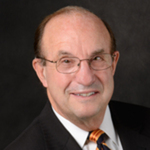
Dr. Balch begins by talking about his scope of responsibilities while he was VP of Hospitals and Clinics and then EVP of Medical Affairs. He then explains that he took on these roles out of loyalty to Charles LeMaistre and to MD Anderson, though his "core values" lie in teaching and clinical work, not in administration. He talks about the need for physicians to have leadership training and the perspective they bring to administration. He also comments that leadership training can prepare researchers to lead team scientific efforts.
Identifier
BalchC_03_20181218_C14
Publication Date
12-18-2018
Publisher
The Making Cancer History® Voices Oral History Collection, The University of Texas MD Anderson Cancer Center
City
Houston, Texas
Interview Session
Charles Balch, MD, Oral History Interview, December 18, 2018
Topic Covered
The Interview Subject's Story - Overview; Leadership
Creative Commons License

This work is licensed under a Creative Commons Attribution-Noncommercial-No Derivative Works 3.0 License.
Disciplines
History of Science, Technology, and Medicine | Oncology | Oral History
Transcript
T.A. Rosolowski, PhD
So you were interim from ’93 to ’94, and then—
Charles Balch, MD
Yes, then that had gone so well that Mickey knew that he was going to retire, which he announced in 1995, to be effective in 1996, once a new president-elect was identified by the University of Texas Board of Regents. There was not, at that time, a formal Executive Vice President for Medical Affairs. So what he organized was two EVPs: the EVP for Medical Affairs that I was appointed to for the two years before his presidency; and David Bachrach was the Executive Vice President for Administration. So I moved up to the tenth floor, next to David Bachrach’s office and down the hall, away from Mickey’s. And that position, actually, even had a larger area of authority throughout the Medical Center, which included the practice plan, managed care, and things even beyond the authority of the hospital and clinics.
T.A. Rosolowski, PhD
Did you enjoy this work?
Charles Balch, MD
I did it out of—I wouldn’t say I did enjoy it, and there’s a story with that. I did it because of my loyalty to Mickey, and his request to do this. I’ve learned over the years, being a VP, an EVP, and a president, that my core values is being an academic oncologist. I was a CEO for 11 years, both at the City of Hope and with the American Society of Clinical Oncology, but my joy is taking care of patients doing research, teaching, and mentoring, and I was glad that I had the opportunity to recycle doing that later in life. So it wasn’t my passion, it wasn’t my ambition, but I did it at the request of the president who hired me, and for whom I was very loyal to.
T.A. Rosolowski, PhD
Well, I interrupted you with that question. You were starting—
Charles Balch, MD
No, that was a really good question at a personal level.
T.A. Rosolowski, PhD
Yeah. Well, I mean, there are a variety—
Charles Balch, MD
And I’ve examined that over the years, and say, no, this is not my core values.
T.A. Rosolowski, PhD
Yeah, I can imagine so, because sometimes you’re in an area and you’re doing really well and accomplishing a lot, but it’s just not hitting your sense of purpose, in a sense.
Charles Balch, MD
Yeah, and I advise people that they really have to understand it’s a different job when you’re doing program leadership, which I was doing, and doing very well, if you step into administrative leadership. And as you rise to higher levels in administrative leadership, you get more of the tougher decisions that you have to make on your own, the so-called win/lose decisions that no matter how much information you have somebody’s going to win, somebody’s going to lose, and those that lose are not going to be very happy at your decision, but you have to
make those kind of decisions. It goes with the job.
T.A. Rosolowski, PhD
Who were the people you called on for support, feedback, to bounce ideas off of?
Charles Balch, MD
Well, the most important person in that time, as VP and EVP, was Donna Sollenberger [oral history interview]. Donna was just remarkable in her administrative leadership. She was a primary advisor in the things that I did. And I’d say David Bachrach was also a very good advisor to me, as well, because I’m a clinician. I don’t have an MBA. I’m not trained as an administrator, and in budgeting. One good thing that Mickey did for all of us at the time was he organized a leadership course with the people at Rice University, and all of us both work collectively on Saturdays on these leadership courses, which brought us together as a working team, but also helped equip us with some of the basics of leadership, management, budgeting, and so forth, so that we were more on an even knowledge about these things in working together.
T.A. Rosolowski, PhD
I just came back not too long ago from interviewing Ray DuBois [oral history interview], and he said, over and over now, that individuals who are getting MDs really need to get another degree, some—
Charles Balch, MD
Yes.
T.A. Rosolowski, PhD
—in business, something related to business, so they can understand the environment.
Charles Balch, MD
My son, Glen, the next generation, has an MD and an MBA, because you do need to do that. I think one of the things that we all learned from this, in these days where physicians didn’t get those degrees, is there is a value of physician perspective in leadership roles, even in the administration. And that doesn’t mean they replace those who come through the MBA route and the administrative route, but bringing the perspective of physicians, bringing the perspective of service to the patients, which you can only understand if you’ve been in that arena, I think was one of the reasons that we were successful as VP for Hospital and Clinics, is understanding both the patients and physician issues that they faced every day in the trenches.
T.A. Rosolowski, PhD
What’s the kind of thing that a physician would know in a leadership role that an MBA who doesn’t have clinical experience would not?
Charles Balch, MD
Well, one of those that we did in that time was to use the profits from the margins, if you will, from the hospital and clinics, and reinvested it back into infrastructure for the physicians, and that included what’s now called the midlevel providers—the physician assistants and nurse clinicians—so that physicians had a team around them to implement. We also hired more database managers to help physicians organize their data, and research nurses to implement protocols. Part of this transformation was in the ’70s and ’80s, the physician really did everything. They had a secretary and maybe a nurse that carried out instructions. But what we really organized that we see today is the physician leading a team of people, and using their experience and their time more efficiently for those things that required their expertise and their education, but delegating more routine things to the team around them. And also, if we were going to be a clinical research organization, that’s team science. Physicians cannot do that on their own. They can’t counsel patients. They can’t do all of the paperwork. So you need a team who was trained to do clinical research, and to follow all the rules that’s in the protocols, do the follow-up, and make sure that the data that’s required is collected at the time that’s required in the protocol. So I think part of that transformation was creating teams of people, working together in the clinical enterprise, that allowed us to use physician time better, as we were increasing the volume of patients coming to MD Anderson, and to embrace innovative care through clinical trials, which it started under Irv Krakoff’s area in medicine, but really was incorporated fully in most of the surgery departments, as well. And then the final part was bringing together the specialties into disease site teams, which really accelerated the progress and the efficiency and the quality of patient care, and the conduct of clinical research.
Recommended Citation
Balch, Charles M. MD and Rosolowski, Tacey A. PhD, "Chapter 14: Comments on Leadership" (2018). Interview Chapters. 476.
https://openworks.mdanderson.org/mchv_interviewchapters/476
Conditions Governing Access
Open
Accessibility Statement
This item was created prior to May 2026. It is preserved for research, reference, or historical recordkeeping. Following WCAG 2.1, the library may provide accessible versions of archival materials upon request. For accommodation requests please submit an accessibility request form.