
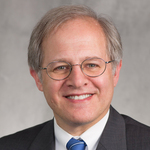
Ethan Dmitrovsky, MD, Oral History Interview, March 3, 2015
Files
Download Full Interview Transcript (519 KB)
Loading...
Description
Major Topics Covered:
- Personal and educational background; overseas experience and inspiration
- Research: cell differentiation; retinoids in leukemic differentiation; lung cancer studies
- The Role of the Provost; personal goals; institutional mandate; detailed of plans
- MD Anderson’s ten-year strategic plan
- Research in an environment of changing economics and health care delivery
Interview Chapters
Chapter 01: An Early Desire to Be a Physician and Focus on Difficult Illnesses
Chapter 02: College Influences: A Research Project, a Book, and Working as an Orderly
Chapter 04: A Fellowship and a Risky and Successful Study of Cell Differentiation
Chapter 06: Shifting Focus to Lung Cancer
Chapter 07: Coming to MD Anderson to Have a Broader Impact on Health
Chapter 08: Views on MD Anderson's 10-Year Strategic Plan and the Role of the Provost
Identifier
DmitrovskyE_01_20150303
Publication Date
3-5-2015
Publisher
The Making Cancer History® Voices Oral History Collection, The University of Texas MD Anderson Cancer Center
City
Houston, Texas
Creative Commons License

This work is licensed under a Creative Commons Attribution-Noncommercial-No Derivative Works 3.0 License.
Topics Covered
University of Texas MD Anderson Cancer Center; UT MD Anderson Cancer Center; University of Texas System. M.D. Anderson Cancer Center; M.D. Anderson Hospital and Tumor Institute at Houston; University of Texas M.D. Anderson Cancer Center; M.D. Anderson Hospital and Tumor Institute
Disciplines
History of Science, Technology, and Medicine | Oncology | Oral History
Recommended Citation
Dmitrovsky, Ethan MD and Rosolowski, Tacey A. PhD, "Ethan Dmitrovsky, MD, Oral History Interview, March 3, 2015" (2015). Interview Sessions. 102.
https://openworks.mdanderson.org/mchv_interviewsessions/102
Conditions Governing Access
Open
Accessibility Statement
This item was created prior to May 2026. It is preserved for research, reference, or historical recordkeeping. Following WCAG 2.1, the library may provide accessible versions of archival materials upon request. For accommodation requests please submit an accessibility request form.

About the Interview
About the Interview Subject:
Ethan Dmitrovsky, MD came to MD Anderson in 2013 to serve as the institution’s Provost and Executive Vice President. He has a faculty appointment in the Department of Thoracic/Head and Neck Medical Oncology in the Division of Cancer Medicine.
Dr. Dmitrovsky’s translational research areas include: retinoid differentiation-based therapy for acute promyelocytic leukemia (APL); developed the molecular genetic test used to detect the PML/RARalpha transcript from the APL t(15;17) rearrangement; retinoid mechanisms leading to cell cycle arrest and repair of DNA damage in normal/malignant lung epithelial cells; engineered transgenic mouse models that express wild-type or proteasomal degradation-resistant cyclin E species in the lung; derived lung cancer cell lines leading to a new model to assess activity of lung cancer therapy and chemopreventive agents (antineoplastics).