Thank you for your consideration in sharing your work at this year’s Ambulatory Celebrate Improvements Fair! This fair is a great opportunity to share improvement projects of any type – quality improvement, process improvement, etc. across Ambulatory operations.
Event information:
- The Ambulatory Celebrate Improvements Fair virtual event will take place on February 19, 2026. Zoom registration link will be available soon. The pre-recorded audio will be shared for attendees. Please have a member of your team available to answer questions via chat during the live event.
- Awards will be announced at the end of the virtual event.
- Winners will also be recognized in-person by Ambulatory leadership in the weeks following the event.
Please let us know if you have any questions. We look forward to celebrating your exemplary work! Ambulatory Celebrate Improvement Fair Committee: [email protected]
- Poster Example
- Poster Template
- Scoring Template
- View how to record your presentation in PowerPoint
- Step-by-step instructions to submit your recording and PowerPoint files
- FAQs
-
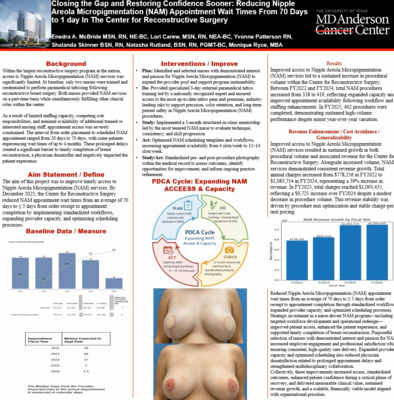
Closing the Gap and Restoring Confidence Sooner: Reducing Nipple Areola Micropigmentation (NAM) Appointment Wait Times From 70 Days to 1 Day in The Center for Reconstructive Surgery
Enedra D. Allen-McBride, Lori Carew, Yvonne Patterson, Shalanda Skinner, Natasha Rutland, and Monique Ryce
This poster highlights a nurse-led quality improvement initiative at the Center for Reconstructive Surgery aimed at reducing Nipple Areola Micropigmentation (NAM) appointment wait times for patients completing breast reconstruction after cancer treatment. Through targeted nurse training, standardized workflows, and optimized scheduling, appointment wait times were reduced from an average of 70 days to five days or less. This Magnet-aligned, nurse-driven model improved patient access and experience, increased staff engagement, reduced provider dissatisfaction, and delivered measurable clinical and financial value, demonstrating the impact of nursing leadership on sustainable, high-value care.
-
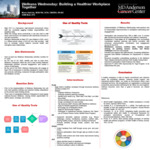
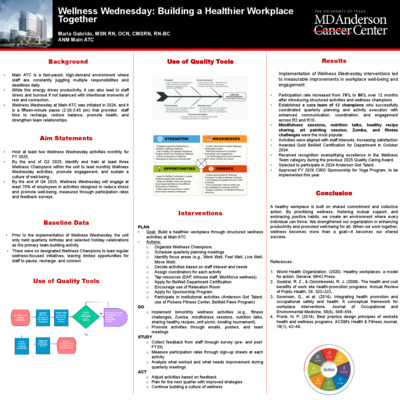
Wellness Wednesday: Building a Healthier Workplace Together
Maria Gabrido
This poster presentation describes the development, implementation, and evaluation of Wellness Wednesday at Main ATC, a collaborative workplace wellness initiative designed to promote employee well-being and engagement. Using the Plan–Do–Study–Act (PDSA) model, the program emphasizes structured planning, staff participation, and continuous improvement. The initiative begins with the creation of Wellness Champions who meet quarterly to plan bimonthly wellness activities aligned with key wellness dimensions and staff interests. Activities are coordinated by assigned champions and implemented organization-wide to encourage participation and foster a supportive culture of well-being. Evaluation and feedback are integral components of the program, allowing for data-driven adjustments and sustained improvement. Results highlight increased employee engagement, improved awareness of wellness practices, and strengthened collaboration across teams. This poster demonstrates how a structured, cyclical approach to wellness initiatives can support a healthier, more engaged workplace.
-
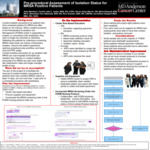
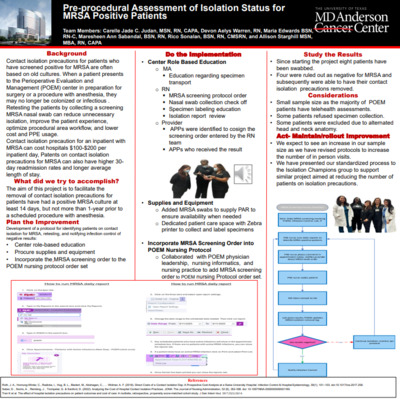
Pre-Procedural Assessments of Isolation Status for MRSA Positive Patients
Carelle J. Judan, Devon A. Warren, Maria Edwards, Maresheen Sabandal, Rico Sonalan, and Allison Starghill
A quality improvement initiative to identify pre-procedural patients with a prior MRSA-positive status and retesting prior to a procedure scheduled with anesthesia, aiming to reduce unnecessary isolation precautions and improve patient care efficiency.
-
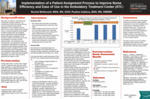
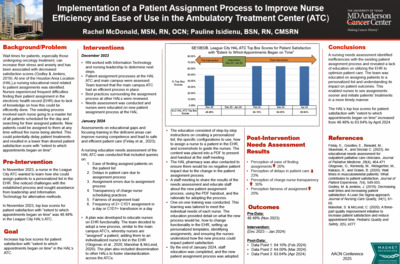
Implementation of a Patient Assignment Process to Improve Nurse Efficiency and Ease of Use in the Ambulatory Treatment Center
Rachel M. McDonald and Chinne P. Isidienu
Wait times for patients, especially those undergoing oncology treatment, can increase their stress and anxiety and has been associated with decreased patient satisfaction scores (Godley & Jenkins, 2019). At one of the Houston Area Location (HAL),a nursing educational need related to patient assignments was identified. Nurses experienced frequent difficulties finding their patient assignment in the electronic health record (EHR) due to lack of knowledge on how this could be efficiently done. The existing process involved each nurse going to a master list of all patients scheduled for the day and searching for their assigned patients. New patients could be assigned to them at any time without the nurse being alerted. This could potentially delay patient treatments and resulted in a lower than desired patient satisfaction score with “extent to which appointments began on time”.
A nursing needs assessment identified inefficiencies with the existing patient assignment process and revealed a lack of education on utilizing the EHR to optimize patient care. The team was educated on assigning patients to a personalized list and understanding its impact on patient outcomes. This enabled nurses to see assignments sooner and initiate patients’ treatments in a more timely manner.
The HAL’s top box scores for patient satisfaction with “extent to which appointments began on time” increased from 48.48% to 63.64% by April 2024.
-
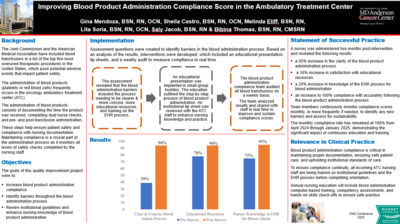
Improving Blood Product Administration Compliance Score in the Ambulatory Treatment Center
Gina Mendoza and Sheila Castro
The objective of this quality improvement project was to increase blood product administration compliance score by identifying barriers in the blood administration process through collaboration with nursing staff and nursing leadership. The goal was to increase and maintain blood product administration compliance from 70% to 100% (February 2024 through April 2024) and sustain compliance of 100%.
-
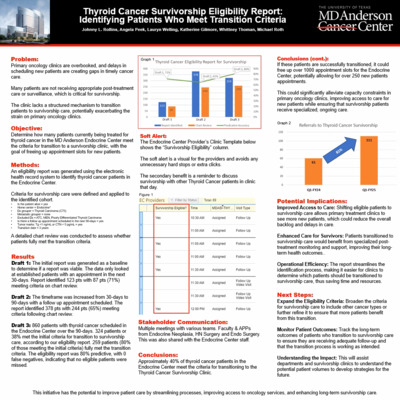
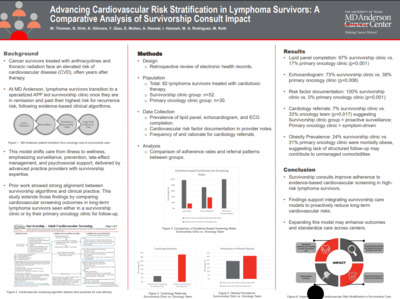
Thyroid Cancer Survivorship Eligibility Report: Identifying Patients Who Meet Transition Criteria
Johnny L. Rollins, Angela Peek, Lauryn Welling, Katherine Gilmore, Whittney Thoman, and Michael Roth
-
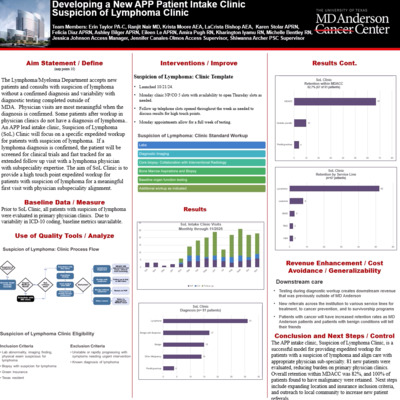
Developing a New APP Patient Intake Clinic: Suspicion of Lymphoma Clinic
Erin R. Taylor and Ranjit Nair
Development of an APP Intake Clinic, Suspicion of Lymphoma Clinic, to provide expedited evaluation for patients with a suspicion of lymphoma.
-
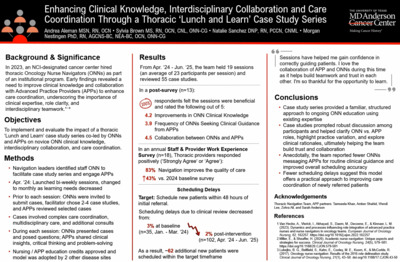
Enhancing Clinical Knowledge, Interdisciplinary Collaboration, and Care Coordination Through a Thoracic 'Lunch and Learn' Case Study Series
Andrea Aleman, Sylvia Brown, Natalie Sanchez, and Morgan Nestingen
The implementation and impact of a thoracic 'Lunch and Learn' case study series co led by oncology nurse navigators and advanced practice providers to enhance novice ONN clinical knowledge, interdisciplinary collaboration, and care coordination.
-
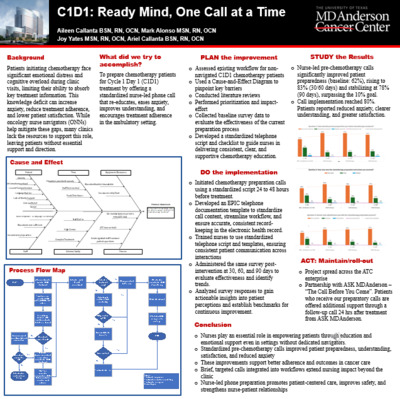
C1D1: Ready Mind, One Call at a Time
Aileen Callanta, Mark Alonso, Ariel Callanta, and Joy Yates
This study explores how a standardized nurse-led phone call, conducted 24–48 hours before Cycle 1, Day 1 of chemotherapy, improved patient preparedness, reduced anxiety, and enhanced comprehension of treatment expectations and procedures.
-
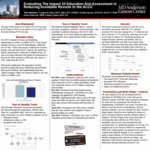
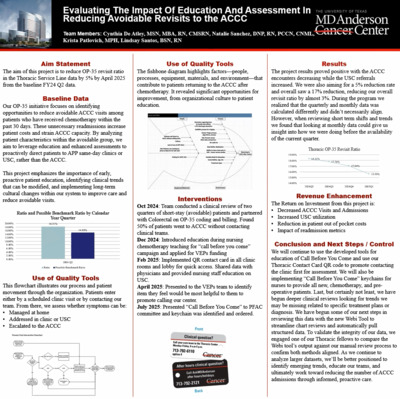
Evaluating The Impact Of Education And Assessment In Reducing Avoidable Revisits to the ACCC
Cynthia De Atley, Natalie Sanchez, Krista Patlovich, and Lindsay Santos
The aim of this project is to reduce OP-35 revisit ratio in the Thoracic Service Line data by 5% by April 2025 from the baseline FY24 Q2 data.
-
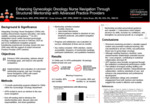
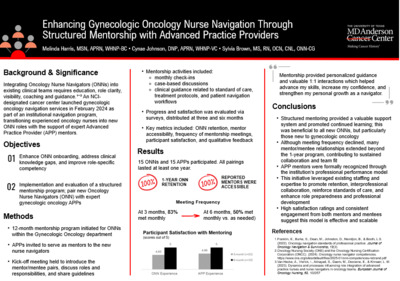
Enhancing Gynecologic Oncology Nurse Navigation Through Structured Mentorship with Advanced Practice Providers
Melinda G. Harris, Sylvia L. Brown, and Cynae A. Johnson
-
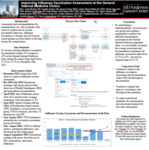
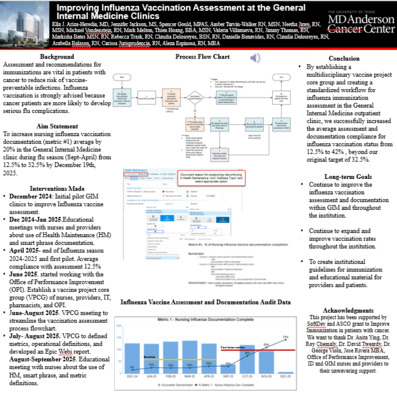
Improving Influenza Vaccination Assessment at the General Internal Medicine Clinics
Jennifer R. Jackson, Ella J. Ariza-Heredia, Spencer Gould Jr, Amber Tarvin-Walker, Neetha T. Jawe, Aleza G. Espinosa, Michael D. Vondenstein, Mark A. Melton, Thien L. Hoang, Valeria Villanueva, Jimmy M. Thomas, Markisha L. Bates, Rebecca P. Trask, Claudia P. Delosreyes, Danielle A. Benavides, Arabella Balason, and Carissa G. Jurisprudencia
To highlight an impactful quality-improvement initiative focused on strengthening influenza vaccination assessment within the General Internal Medicine clinics. Because patients with cancer face a significantly higher risk of complications from influenza, ensuring accurate vaccination assessment and documentation is not just important—it is essential to their safety and well-being.
-
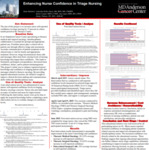
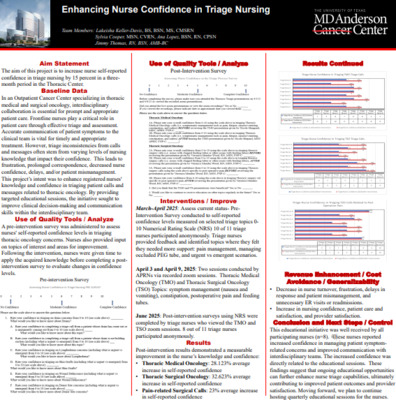
Enhancing Nurse Confidence in Triage Nursing
Lakeisha T. Keller-Davis, Sylvia Cooper, Jimmy Thomas, and Ana Lopez
The aim of this project is to increase nurse self-reported confidence in triage nursing by 15 percent in a three-month period in the Thoracic Center.
-
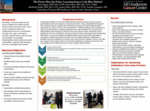
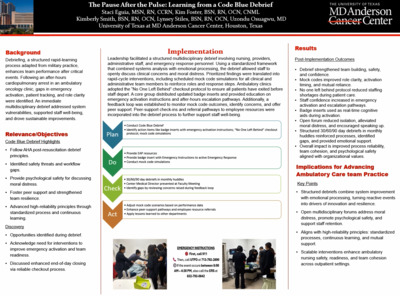
The Pause After the Pulse: Learning from a Code Blue Debrief
Eguia Staci, Kimberly Foster, Kimberly Foster, Lynsey Stiles, and Uzondu Osuagwu
A structured multidisciplinary after-hours code debrief was utilized to learn from identified safety gaps by using psychological safety, peer support, mock codes and badge inserts utilizing cognitive aids. Overall impact is improved safety, process reliability, team cohesion, and psychological safety aligned with organizational values.