-
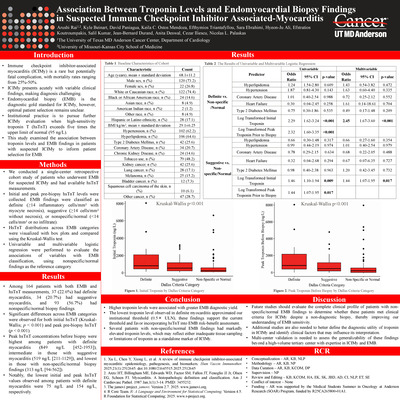
Association Between Troponin Levels and Endomyocardial Biopsy Findings in Suspected Immune Checkpoint Inhibitor Associated-Myocarditis
Arushi Rai, Kyle Beinart, David Paniagua, Keila C. Ostos Mendoza, Efthymios Triantafyllou, Sara Ebrahimi, Hyeon-Ju Ali, Efstratios Koutroumpakis, Salil Kumar, Jean-Bernard Durand, Anita Deswal, Cezar Iliescu, and Nicolas L. Palaskas
-
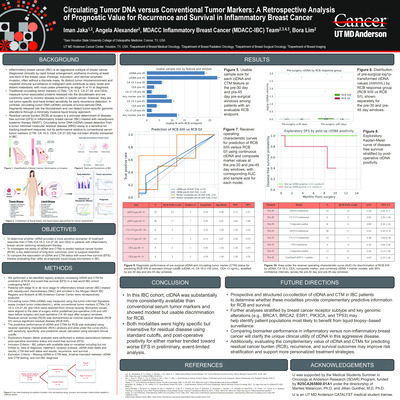
Circulating Tumor DNA versus Conventional Tumor Markers: A Retrospective Analysis of Prognostic Value for Recurrence and Survival in Inflammatory Breast Cancer
Iman Jaka, Angela Alexander, and Bora Lim
-
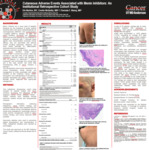
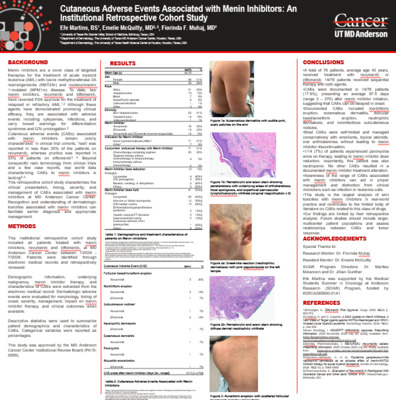
Cutaneous Adverse Events Associated with Menin Inhibitors: An Institutional Retrospective Cohort Study
Efe Martins, Emelie McQuitty, and Fiorinda Muhaj
Background
Menin inhibitors are targeted therapies approved for the treatment of relapsed or refractory acute myeloid leukemia (AML) with KMT2A rearrangements or NPM1 mutations. Although these agents have shown promising clinical activity, cutaneous adverse events (CAEs) remain poorly characterized. This study describes the clinical presentation, timing, management, and outcomes of CAEs associated with menin inhibitors.
Methods
We performed a single-center retrospective cohort study of patients treated with revumenib or ziftomenib at MD Anderson Cancer Center between January 2024 and July 2026. Electronic medical records were reviewed for patient demographics, treatment characteristics, and documented CAEs. Descriptive statistics were used to summarize the findings.
Results
Seventy-eight patients received revumenib or ziftomenib during the study period. Fourteen patients (17.9%) developed at least one documented CAE. The most common reactions were follicular-based acneiform eruptions (36%), followed by morbilliform eruptions (21%) and noninfectious subcutaneous nodules (21%). Less common reactions included neutrophilic dermatosis, eczematous dermatitis, paronychia, and mucositis exacerbation. The mean time to onset was 67.5 days (range, 3–270 days). Most reactions were mild and improved with conservative treatment, including topical corticosteroids, topical antibiotics, emollients, and oral antihistamines. Only one patient had a dose modification in which paronychia contributed to the decision, although the patient was also neutropenic.
Conclusions
Cutaneous adverse events associated with menin inhibitors were uncommon and generally manageable with conservative treatment. These reactions may occur several months after treatment initiation, highlighting the importance of continued dermatologic monitoring throughout therapy. This study represents one of the largest real-world analyses of CAEs associated with menin inhibitors and adds to the limited literature describing the dermatologic safety profile of this class of drugs.
-
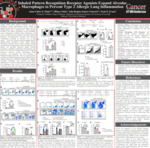
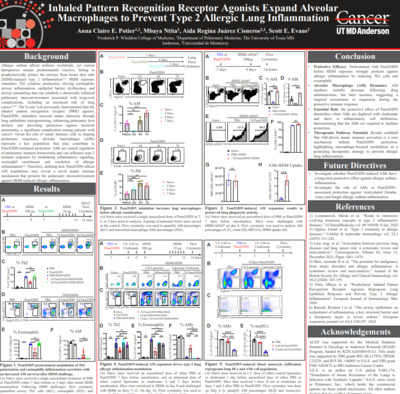
Inhaled Pattern Recognition Receptor Agonists Expand Alveolar Macrophages to Prevent Type 2 Allergic Lung Inflammation
Anna Claire E. Potier, Mbaya Ntita PhD, Aida Regina Juárez Cisneros, and Scott E. Evans MD
-
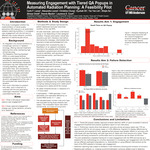
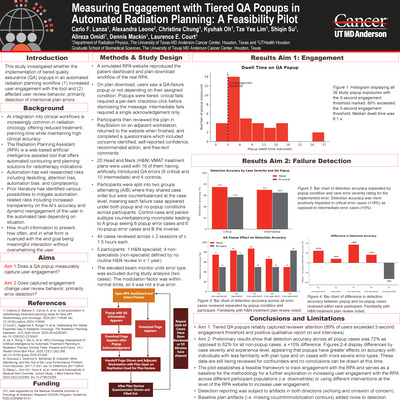
Measuring Engagement with Tiered QA Popups in Automated Radiation Planning: A Feasibility Pilot
Carlo F. Lanza, Alexandra Leone, Christine Chung, Kyuhak Oh, Tze Yee Lim, Shiqin Su, Alireza Omidi, Dennis Mackin, and Laurence E. Court
-
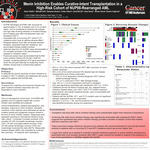
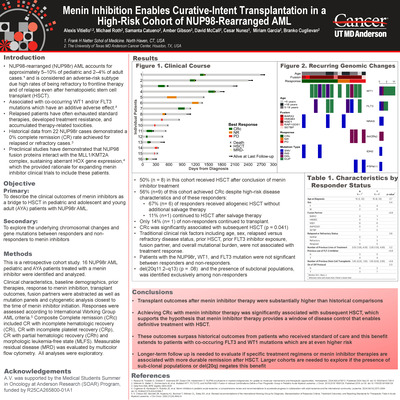
Menin Inhibition Enables Curative-Intent Transplantation in a High-Risk Cohort of NUP98-Rearranged AML
Alexis Vitiello, Michael Roth, Samanta Catueno, Amber Gibson, David McCall, Cesar Nunez, Miriam Garcia, and Branko Cuglievan
-
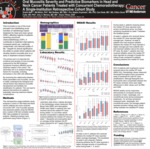
Oral Mucositis Severity and Predictive Biomarkers in Head and Neck Cancer Patients Treated with Concurrent Chemoradiotherapy: A Single-Institution Retrospective Cohort Study
Srishti Seth, Md Mahin, Mai Mandor Badawy, Eric Ababio Anyimadu, Cem Dede, Clifton David Fuller, Amy Catherine Moreno, and Busra Yilmaz
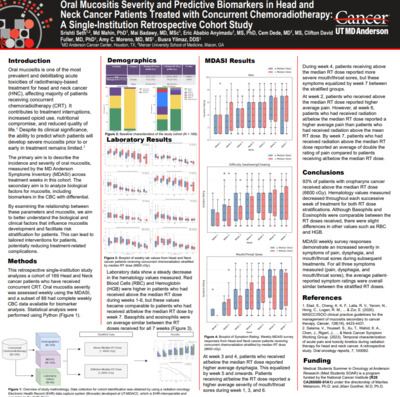
Oral mucositis is one of the most prevalent and debilitating acute toxicities of radiotherapy-based treatment for patients with head and neck cancer (HNC) receiving concurrent chemoradiotherapy (CRT). Although it contributes to treatment interruptions, increased opioid use, nutritional compromise, and reduced quality of life, the ability to predict which patients will develop severe mucositis prior to or early in treatment remains limited. We aim to describe the incidence and severity of oral mucositis, measured by the MD Anderson Symptoms Inventory (MDASI) across treatment weeks in this cohort and analyze biological factors for mucositis, including biomarkers in the CBC with differential.
This retrospective single-institution study analyzes a cohort of 169 Head and Neck cancer patients who have received concurrent CRT. Oral mucositis severity was assessed weekly using the MDASI, and a subset of 88 had complete weekly CBC data available for biomarker analysis. Statistical analysis were performed using Python.
93% of patients with oropharynx cancer received above the median RT dose (6600 cGy). Hematology values measured decreased throughout each successive week of treatment for both RT dose stratifications. Although Basophils and Eosinophils were comparable between the RT doses received, there were slight differences in other values such as RBC and HGB. MDASI weekly survey responses demonstrate an increased severity in symptoms of pain, dysphagia, and mouth/throat sores during subsequent treatments. For all three symptoms measured (pain, dysphagia, and mouth/throat sores), the average patient-reported symptom ratings were overall similar between the stratified RT doses.
By examining the relationship between these parameters and mucositis, we aim to better understand the biological and clinical factors that influence mucositis development and facilitate risk stratification for patients. This can lead to tailored interventions for patients, potentially reducing treatment-related complications.
-

Risk factors for return to the operating room for seromas after wide resection of soft tissue sarcomas of the thigh
Thomas G. Kane, Barlas Goker, Yifi Wang, Shalin S. Patel, Alysia S. Kemp, Justin E. Bird, Bryan S. Moon, Robert L. Satcher, Patrick P. Lin, David A. Adelman, and Valerae O. Lewis
Thomas G. Kane and Barlas Goker contributed equally and share first authorship.
-
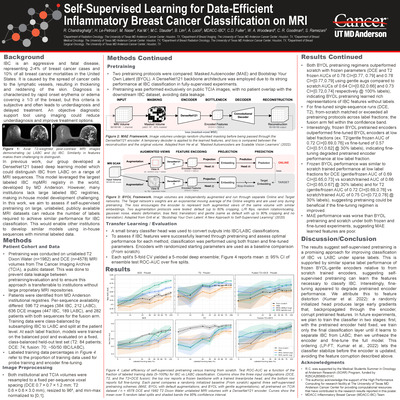
Self-Supervised Learning for Data-Efficient Inflammatory Breast Cancer Classification on MRI
Rohan Gajanan Chandraghatgi, Huong Le-Petross, Mohamed Naser, Megumi Kai, Michael C. Stauder, Bora Lim, MDACC-IBC, Clifton David Fuller, Wendy A. Woodward, Chelain Rae Goodman, and Saleh Ramezani
-
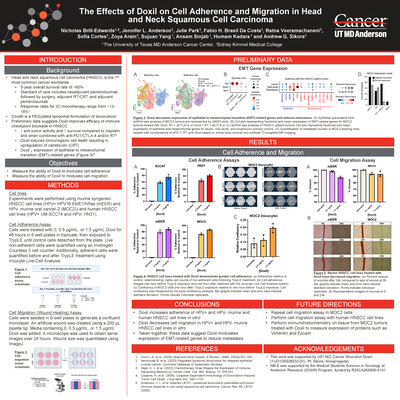
The Effects of Doxil on Cell Adherence and Migration in Head and Neck Squamous Cell Carcinoma
Nicholas G. Brill-Edwards, Jennifer L. Anderson, Julie Park, Fabio H. Brasil Da Costa, Ratna Veeramachaneni, Sofia Cortes, Zoya Arain, Sujuan Yang, Ansam Sinjab, Humam Kadara, and Andrew G. Sikora
Medical Students Summer in Oncology at Anderson Research (Med Students SOAR) is a program funded by the National Cancer Institute (R25 CA265800-01A1) under the directorship of Marites Melancon, Ph.D. and Jillian Gunther, M.D, Ph.D.
The major objective of the Med Students SOAR program is to promote broader physician participation in all aspects of supporting and engaging with cancer research. Under the mentorship of our renowned faculty, students will not only develop technical and laboratory skills through individualized research projects but also learn about delivering research-driven multidisciplinary and personalized oncology care. This is accomplished through lectures, workshops, clinical observations and simulation trainings. This program aims to promote and support the long-term pursuit of careers in basic, translational and clinical cancer research.
Printing is not supported at the primary Gallery Thumbnail page. Please first navigate to a specific Image before printing.