Medical Students Summer in Oncology at Anderson Research (Med Students SOAR) is a program funded by the National Cancer Institute (R25 CA265800-01A1) under the directorship of Marites Melancon, Ph.D.; Jillian Gunther, M.D, Ph.D.; and Vickie Shannon, M.D.
The major objective of the Med Students SOAR program is to promote broader physician participation in all aspects of supporting and engaging with cancer research. Under the mentorship of our renowned faculty, students will not only develop technical and laboratory skills through individualized research projects but also learn about delivering research-driven multidisciplinary and personalized oncology care. This is accomplished through lectures, workshops, clinical observations and simulation trainings. This program aims to promote and support the long-term pursuit of careers in basic, translational and clinical cancer research.
-
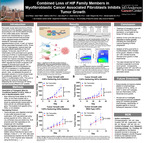
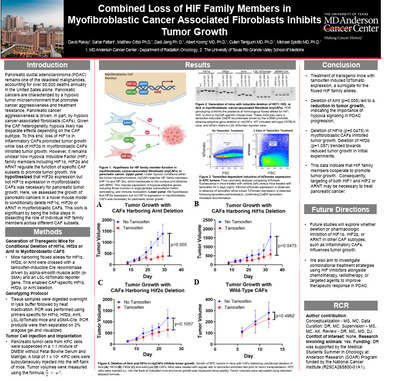
Combined Loss of HIF Family Members in Myofibroblastic Cancer Associated Fibroblasts Inhibits Tumor Growth
David Rakay, Sahar Fattani, Matthew Cribb, Dadi Jiang, Albert Koong, Cullen Taniguchi, and Michael Spiotto
Pancreatic ductal adenocarcinoma (PDAC) is an aggressive form of cancer characterized by a hypoxic tumor microenvironment that is driven in part by Cancer-Associated Fibroblasts (CAFs). One mechanism through which hypoxia mediates tumor aggression and treatment resistance in PDAC is through activation of the HIF Pathway. A variety of different CAF subtypes exist in the tumor microenvironment with their precise roles in tumorigenesis still being studied. Previous studies showed that the loss of Hif1α in inflammatory CAFs promoted tumor growth and that the loss of Hif2α in myofibroblastic CAFs promoted survival in mice. Based on this data, it was hypothesized that the expression of Hif2α, but not Hif2α, in myofibroblastic CAFs was necessary for pancreatic tumor growth.
-
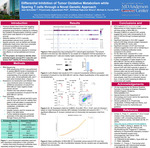
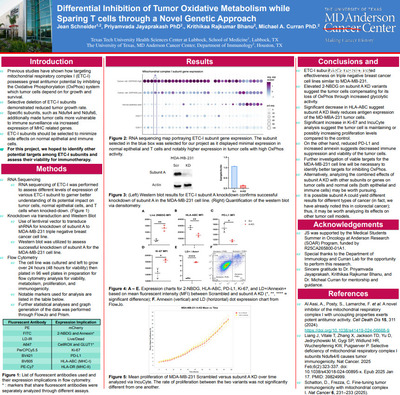
Differential Inhibition of Tumor Oxidative Metabolism while Sparing T Cells through a Novel Genetic Approach
Jean Schneider, Michael Curran PhD, Priyamvada Jayaprakash PhD, and Krithikaa Rajkumar Bhanu
In pursuit of identifying new potential targets for immunotherapy, there has been renewed focus on Oxidative Phosphorylation (OxPhos) metabolism that cancers rely on for growth and, to some degree, immune suppression. Previous research has shown selective deletion of the mitochondrial Complex I (CI) subunits Ndufs4 and Ndufs6 increases the efficacy of immunotherapy through induction of genes related to MHC class-I expression leading to improved tumor antigen presentation. Based on these studies, we hypothesize that selectively targeting CI subunits differentially expressed in tumor cells versus immune effector cells will significantly hinder tumor cell viability and growth without compromising anti-tumor immunity.
-
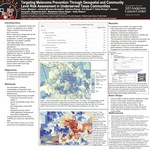
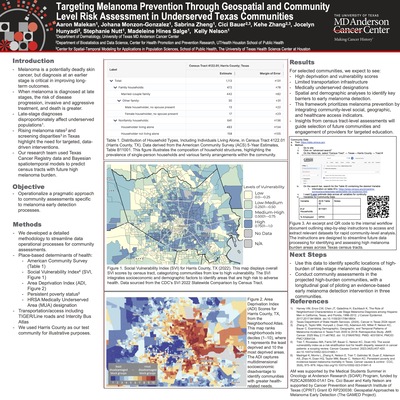
Targeting Melanoma Prevention Through Geospatial and Community Level Risk Assessment in Underserved Texas Communities
Aaron Malekan, Johana Monzon-Gonzalez, Sabrina Zheng, Cici Bauer, Kehe Zhang, Jocelyn Hunyadi, Stephanie Nutt, Madeleine Hines Salge, and Kelly Nelson
-
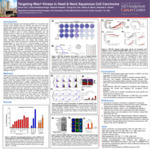
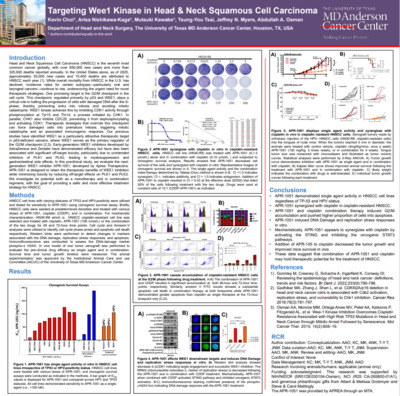
Targeting Wee1 Kinase in Head & Neck Squamous Cell Carcinoma
Kevin Choi, Arisa Nishikawa-Kaga, Mutsuki Kawabe, Tsung-You Tsai, Jeffrey Myers, and Abdullah Osman