
Files
Download Poster (680 KB)
Description
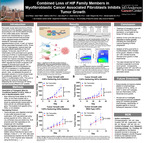
Pancreatic ductal adenocarcinoma (PDAC) is an aggressive form of cancer characterized by a hypoxic tumor microenvironment that is driven in part by Cancer-Associated Fibroblasts (CAFs). One mechanism through which hypoxia mediates tumor aggression and treatment resistance in PDAC is through activation of the HIF Pathway. A variety of different CAF subtypes exist in the tumor microenvironment with their precise roles in tumorigenesis still being studied. Previous studies showed that the loss of Hif1α in inflammatory CAFs promoted tumor growth and that the loss of Hif2α in myofibroblastic CAFs promoted survival in mice. Based on this data, it was hypothesized that the expression of Hif2α, but not Hif2α, in myofibroblastic CAFs was necessary for pancreatic tumor growth.
Program Affiliation
Med Student SOAR Program
Publication Date
8-2025
Publisher
The University of Texas MD Anderson Cancer Center
Recommended Citation
Rakay, David; Fattani, Sahar; Cribb, Matthew; Jiang, Dadi; Koong, Albert; Taniguchi, Cullen; and Spiotto, Michael, "Combined Loss of HIF Family Members in Myofibroblastic Cancer Associated Fibroblasts Inhibits Tumor Growth" (2025). Students Summer in Oncology at Anderson Research (SOAR) 2025. 3.
https://openworks.mdanderson.org/soar25/3
Keywords
Cancer-Associated Fibroblasts; Pancreatic Adenocarcinoma; Hypoxia Signaling; Hypoxia-Inducible Factors
Accessibility Statement
This item was created prior to May 2026. It is preserved for research, reference, or historical recordkeeping. Following WCAG 2.1, the library may provide accessible versions of archival materials upon request. For accommodation requests please submit an accessibility request form.